
˚✶⚠︎⋆. Interview » Jon Moritsugu ✃♬⋆.˚
on punk filmmaking, shocking with honesty, and editing with your eyes closed

A few years ago, I attended a Random Man Editions-presented screening of Jon Moritsugu’s 1993 movie Terminal USA at The Millennium Film Workshop in Brooklyn. Made with a grant from PBS, the dark comedy follows a “cookie cutter” Asian family in the suburbs over the course of an out-of-control school night. As I watched, I slowly started to piece together that the director and I had been in contact years earlier. Later, I pulled up a 2017 email exchange between the two of us; Jon had approached me and I had agreed to film a cameo for his 8th feature, Numbskull Revolution. His prompt: “You would be playing a nihilistic artist.”
Since the 1980s, Jon Moritsugu has made a name for himself as the “Godfather of Punk Cinema,” shocking audiences with his freaked-out, deep-fried 16mm films. Armed with a degree in Semiotics from Brown, he’s created a body of work that satirizes fame, drugs, rock and roll, critical theory, and exploitation, exploring larger questions around what it means to be an artist in the process. He often works with the same actors across projects—his ex-partner and frequent collaborator Amy Davis, James Duval—and his soundtracks are stacked with the stars of underground music: Casiotone for the Painfully Alone, Dirty Beaches, Unrest, Deerhoof.
I was fortunate enough to reconnect with Jon after the NYC premiere Numbskull Revolution at The Roxy Cinema on Friday the 13th (Jon was handing out special buttons to movie-goers for the occasion that read “THE URBAN NIGHTMARE CONTINUES!!!”). We talked about his low-budget, high-impact filmmaking process, upcycled souls, and what happens after a nearly decade-long project is released into the world.
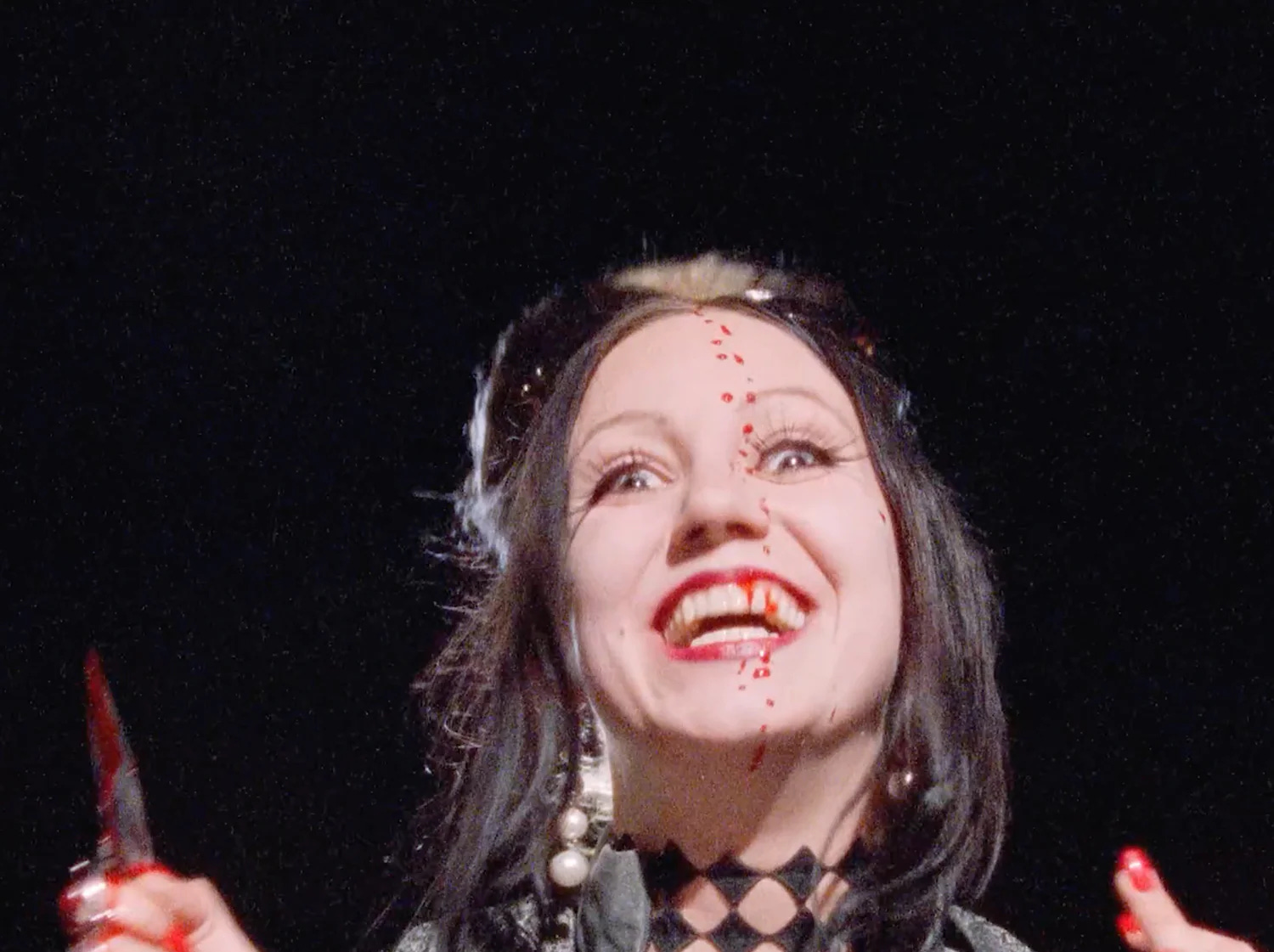
So, I watched all of your feature films in order.
Oh my God, your eyes and brain must be bleeding.
No no no, I took my time [laughs]. After I finished, I went back and watched your first short, Mommy, Mommy, Where’s My Brain?
It’s the first movie I made that I really like and I still love it.
It was fun to watch last, because I could see all of your ideas taking shape there. Even the way you use title cards and text in all of your films.
I refer back to that movie every now and then. I watch it and I’m sort of like, I’ve got to remind myself where I started, I want to get back to this vibe. I’m using the language and the discourse and also hating it at the same time. Some people will think you’re contradicting yourself or you’re not making sense. That’s life.
Our paths crossed in 2017.
You reached out to me.
You were supposed to be in that movie [Numbskull Revolution] and then things in my life started falling apart and I couldn’t hold on to anyone or anything. Let me just find this [looking through camera roll]. Oh yeah, check this out.
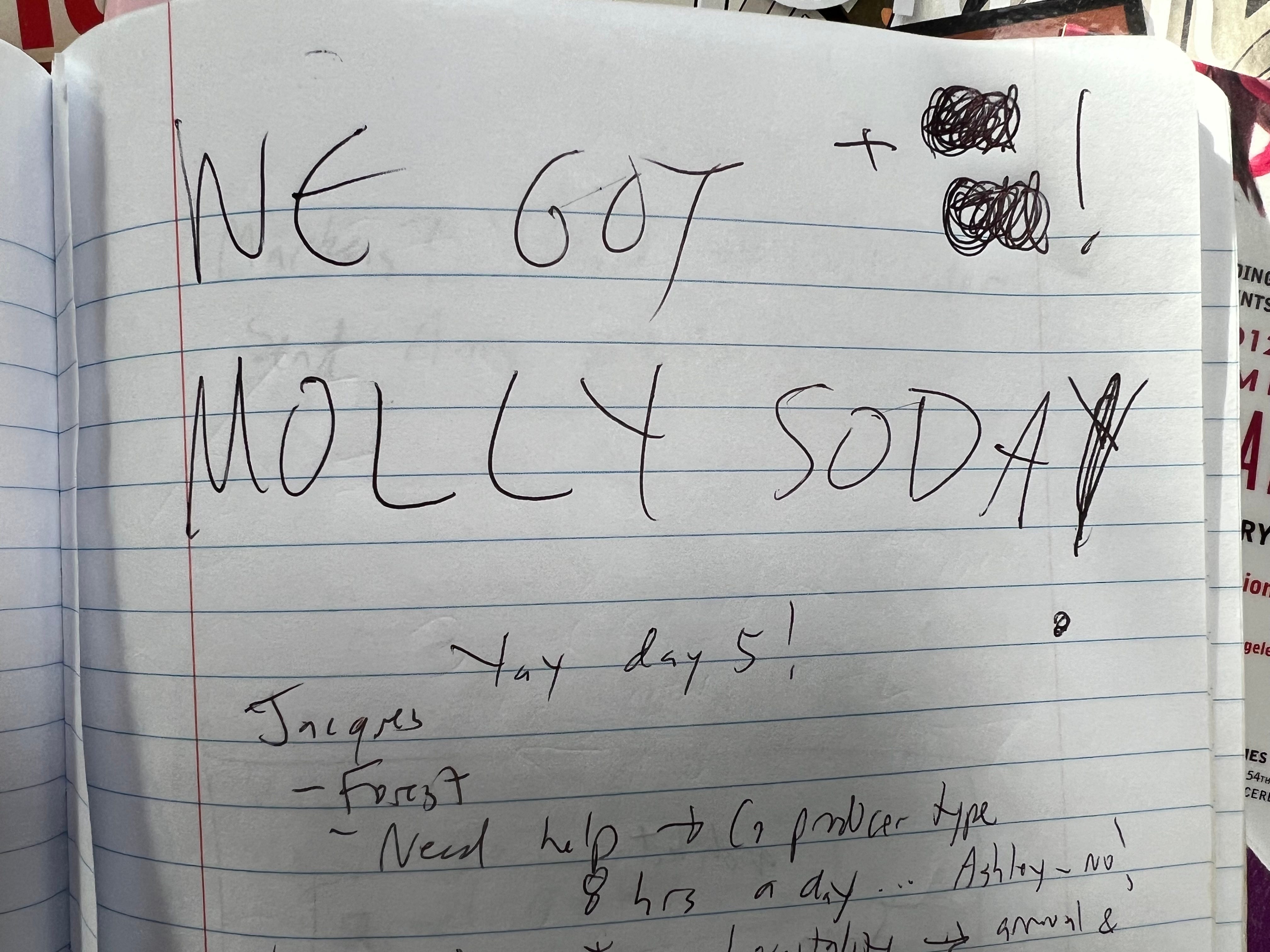
This is from 2017.
That’s so funny.
It was in the middle of shooting the movie and you had agreed to do it. I was so excited and then I started post-production and everything leaked away.
Now it’s nine years later and you’re currently in the process of premiering the film around the country. It’s also your most hi-definition movie yet. What did you shoot it on?
It was raw 4K.
You still find a way to degrade the image, whether it’s digital or 16mm.
A lot of it is really lo-fi, refilming stuff off the monitors. With some of these movies, I’ve had these really high-end technical people come up asking how I’m doing things. And they’re guessing I used this system or some three million dollar other system. No, I got a crappy camcorder and filmed off a TV set.
I love all the zooms that you do, when it gets really crunchy.
I love grain and texture and imagery falling apart and decomposing. It’s so gorgeous to me. It’s the visual equivalent of feedback and noise.
Your films feel like noise music, especially Numbskull Revolution.
I really like the soundtrack. It’s my favorite soundtrack ever. It’s so lush and big.
How do you determine the soundtrack?
I want to be able to watch the entire movie with my eyes closed. If you can watch your movie with your eyes closed, you’ve got a good movie. With a lot of scenes, I’m just closing my eyes and letting the audio inform me of what’s going on. If it doesn’t do it, it’s not ready.
You’re also often friends with the bands that you include on your soundtracks. Is it important to you to collaborate with musicians?
Yeah, it’s really important because if you’re not friends you’ve got to do the legal shit with lawyers and music rights are so fucked up. If you’re working with friends you can get away with a one-page contract. I even have a lot of handshake deals where it’s like, you’re cool, I’m cool, shake hands over the phone. When I started out, I needed a way to sell the movie. I didn’t have any stars, I didn’t have a name, so I grabbed these bands that were known and the bands were the stars of the movie.
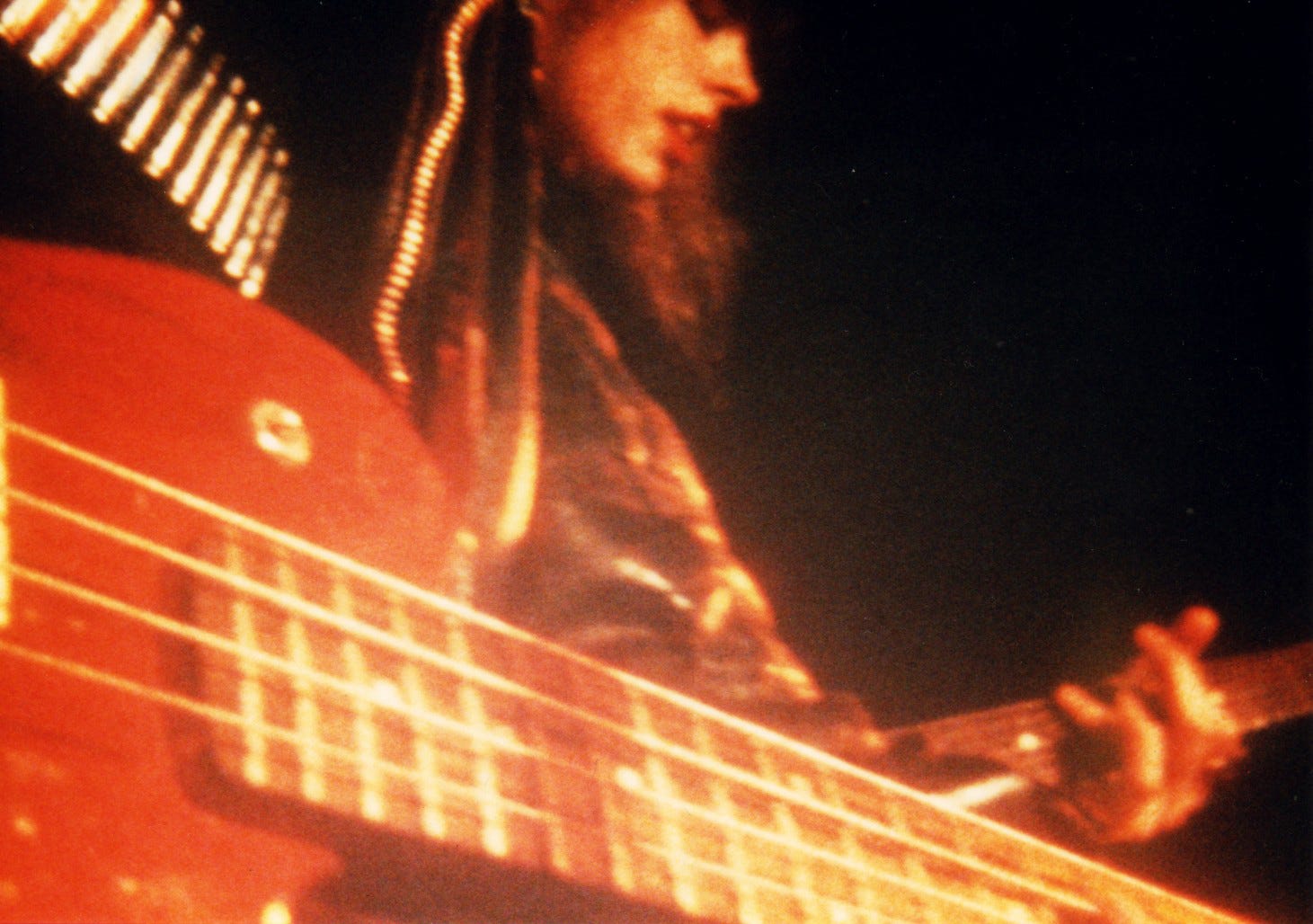
Even your first feature, My Degeneration, is about a girl band sponsored by the American beef industry. Are you a vegetarian? Do you get asked that a lot?
We were about to start shooting Pig Death Machine and the director of photography was vegetarian. We shot in Santa Fe and right before we started shooting Amy [Davis] went vegetarian. After we wrapped, I didn’t want to die wondering what it was like to be a vegetarian, so I went vegetarian too. I was vegetarian for a couple years. I tried it all, vegan, raw vegan, the works, and it just didn’t work for me. I’ve heard it’s related to your blood type. I’m type B and they say B needs meat. Are you vegetarian?
Briefly in middle and high school, I was very into animal rights. But I was such a bad vegetarian and I wouldn’t eat any vegetables. I was just eating french fries and grilled cheese. What’s the significance of all the meat in your films though? Is it a visceral thing?
When I started using meat in Mommy, Mommy, Where’s My Brain? I loved that it was a substance that you could mold. It was so fun to animate, you can just sort of move it around. It’s such a loaded thing, you can trigger people with meat. It’s a really easy way to offend people or shock them.
Is that your hope with your films?
To shock people?
Yeah.
Yeah, definitely, that’s part of it. It’s mutated, because when I started out, it was fucked up, my films were my way of telling you that you suck and I’m great. I mean, that was my whole point, I just wanted to make good movies and blow people away and say you stink, fuck you. I wanted to throw shit in your face and if you couldn’t take it, leave. I wanted a third of the audience to leave.
Now I’m the grinch with a heart. I want to give people inspiration and hope. It’s weird, now I want to do entertainment. It’s a fucked up, hard world and if you can get away to a movie for an hour and a half and forget the world, it’s important. But I love shocking people. Even with the editing, I love shock cuts and these moments where through the edit you hit someone in the gut.
I really enjoyed your honesty during the Q&A.
That’s a new thing too. I’ve done so many of them and in the past I used to pose up there and be funny, say fuck you to people, and walk away unscathed. When I premiered the movie at the Hammer Museum, before going out I realized the only way it was gonna work, if I was gonna survive and be happy in life, was to be completely honest. It was scary because the Hammer show was the first show that I went to without Amy. It was us representing the movie for years and a lot of people didn’t know what happened. I was going to have to talk about it. The curator before the show said, You know, we’re gonna do Q&A, what am I allowed to talk about? I just said anything and if you hit anything I’m uncomfortable with, I’ll say I can’t answer that. He addressed it and said, Hey, Jon, the big question from the audience is what happened to you and Amy. That was my moment to be honest and it felt so good. I realize now that my strength is my vulnerability. Me being this open, even walking through the street, it’s powerful. This is the safest I’ve ever felt in life.
Do you feel like you’re going through a major shift?
I went through a huge shift in the last few years. I’ve been diagnosed with extreme PTSD. I used to dream every night and I lost dreaming for three years and the doctors told me it’s unhealthy because it meant I wasn’t getting any REM sleep, which fucks up your brain. The cool thing is, there’s something called Post-Traumatic Growth. With some people who go through really terrible shit, when they come out of it it’s like a miracle and you become a different person. That’s me. I’m honestly a different person now than I was a year ago. I used to hate human beings. I’d see a crowd of people, avoid them. Someone’s talking to you, avoid them. I love humans now.
When I started dreaming again I had one dream a night for three nights in a row. The first dream was my spirit talking to God and God’s like, “You’re back Jon.” The second dream was, again, another talk with God saying, “Hey Jon, welcome back. You’re part of life again.” The third dream was the fucking trippiest dream of my life. I’m in this huge medical laboratory for the universe, like an emergency room for the universe. It was beautiful, this dimly lit museum with so much space. I walk in and I see my body, like a mannequin with its head chopped off, and suddenly God appears on my shoulder. There’s something being poured into my body through my neck, this crystal glittery energy that was a combination of a liquid, a gas, and light pouring in. So I’m like, “God, what the fuck is going on? You’re giving me a new soul.” God looks at me and says, “It’s not quite a new soul. It’s upcycled.”
With my sleep schedule all fucked up, my eating got fucked up too. For four or five months I could only eat three foods. It was terrible. Filet-O-Fish from McDonald’s, cheesecake, and these weird purple shakes from this one place in Honolulu. Anything else I would eat I would get nauseous or throw up. I couldn’t figure out what was going on. I was like, I’m eating baby food. This is easily digestible. I’m a baby. I researched babies and their sleep and for the first year babies can’t differentiate between night and day. They have no sleep schedule.
Do you go out at all when you’re up super late?
In Honolulu it’s a really nice time to drive around. What I’ve started doing is walking on the beach, Waikiki at like 2 or 3 a.m. There are some weird people out there but I’m probably the weirdest person. I used to think that cities were the biggest type of physical presence. Recently, I find that cities are too small for me. This is something I never thought I would say, but my biggest force and energy in my life is my emotions. In cities I feel too big. I get here and I’m way louder than this fucking city. I don’t want to be here. I want to be by an ocean that’s a million times louder than me and more powerful than me. That’s really good for me to keep my emotions in check. In Chinese paintings they always make the people really small. I want to be in a place where I feel small.
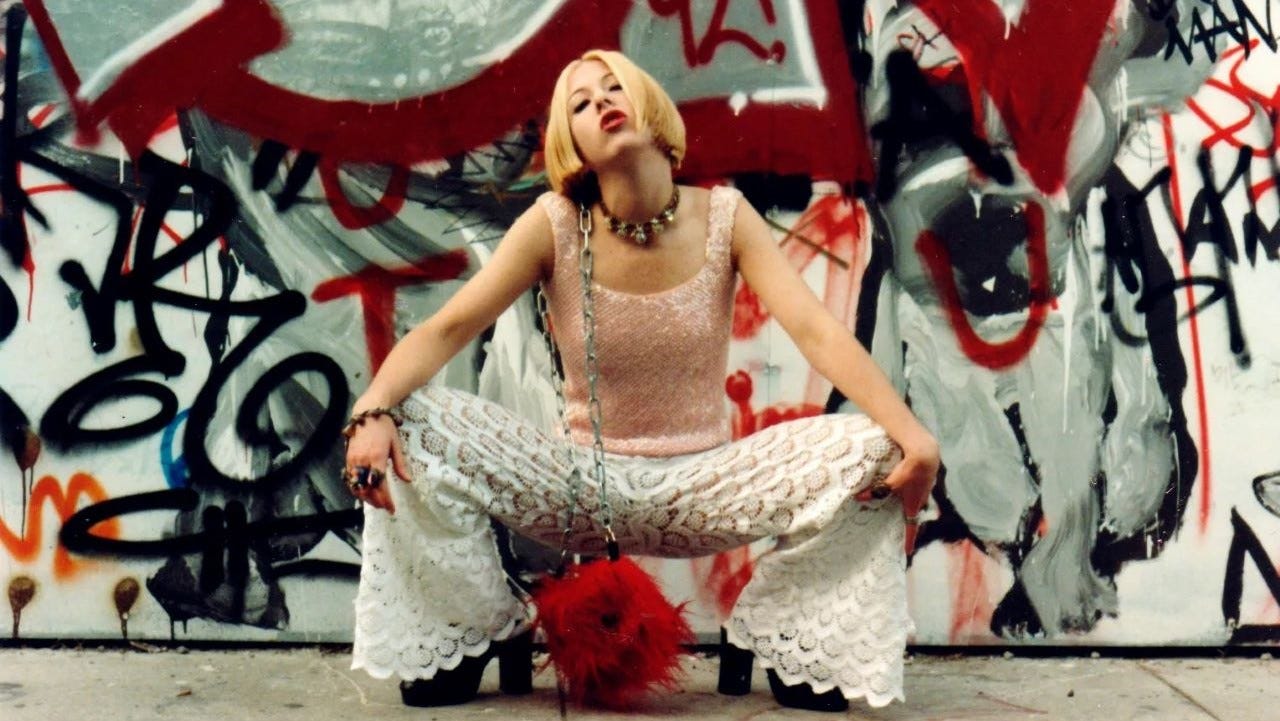
Why is Mod Fuck Explosion your favorite film?
Because Amy and I were falling in love during the movie. We had dated in college and it was on again off again. I moved out to San Francisco and she was on Long Island living at home. I made Hippy Porn and it was terrible. Halfway through the movie, I told myself I wanted to have fun making the next movie and Amy was the person I wanted to have fun with. So I asked her to be in the movie and at the time she was dating this zillionaire dude, he was like the heir to Standard Oil. She came out to do the movie and I was like, I’m gonna win her back. Within three days, we’re holding hands and shit. She had to go back to Long Island, break up with this dude and then move out to San Francisco. That movie was so much about us falling in love on set and keeping it a secret from the producers. Everyone at the wrap party was like we knew what was going on.
Would you say Mod Fuck Explosion is your most popular film?
By far. It’s getting as much play now as when it got finished. It has not lost any energy. It’s funny because every movie we’ve done since then, Amy and I have looked at each other and said we’re gonna try to make something better than Mod Fuck. And we’d finish a movie and be like, it wasn’t as good.
I love Fame Whore.
This is a crazy thing, it actually was an Oscar contender.
What was the category?
It wasn’t even a category. I think it was probably Best Motion Picture. Basically, what they did was they sent me an official letter that said I was an Oscar contender. I thought it was a joke. I had a couple friends who had been to the Oscars and promoted shit, so I called these friends and they were like, this is real Jon. They have secret committees and by being a contender it means you’re in the top 50 films. From these 50, they’re gonna get it down to a short list which is 12 and then five. All these friends were like, Put on your promotion hat, go into overdrive, send out tapes, tell the press, go crazy, you are now running an Oscar campaign. Amy and I started doing that. We sent out hundreds of press releases to mainstream media.
Wow.
Then the Oscars got in touch and they had kicked me out of the competition. They have rules where to be a contender you have to have a one week run in a theater that they give a thumbs up to, which is like 50 theaters in America, so you would have to play at a mainstream, high-end theater for one week. You have to get a certain number of good reviews. You have to play at one of these A-list festivals. If you don’t they’re not a contender. The technicality was that I screened in LA for four weeks, but on 16mm instead of 35mm.
I’m a complainer and I write really good complaint notes so I wrote a really nice complaint note to the Oscar committee and it got passed up to the dude in charge of the Oscars, John Davis. Suddenly, I’m on the phone with him. He was such a cool dude and I explained the situation and he said, I agree with you, that the rule goes back to the 1940s when student filmmakers worked in 16mm and we didn’t want to deal with students. He was like, Your movie is valid and it just happened to be in the wrong format, this rule is fucked up.
Did they change the rule?
The next year they did. It was funny because he just said, Hey Jon, congratulations, you changed the Oscars.
Your film Terminal USA was funded and aired by PBS. What was the experience of working with a larger budget and having to deal with outside input?
I was terrible, man. I was so aggressive and had such a chip on my shoulder. There really were people who showed up to help me. I was so judgmental of people, even James Schamus. When he was running Focus Features his budget was a billion dollars a year to throw at filmmakers to make movies. I was going to be one of those. He wanted to make me the next Ang Lee.
We had a meeting and he said the biggest stars of indie film right now are the directors. This was in the old days where there was a huge division between indie actors in Hollywood. There wasn’t that much crossover. So he’s like, The directors are the stars, we have gay stars, we have Black stars, we have lesbians, but right now there are no Asian stars for indie film. He anointed me as the next Asian star. He literally said in this meeting, Stick with me and I’ll promise you tons of money, a career, and we’re going to win Oscars.
I asked, What do I have to do to make this happen? What are the rules? He gave me the three rules. The first was, I had to dial down my punk rock edge because it wasn’t marketable, and was told I had to dial up the Asianness. So I was like, What do I have to do, use chopsticks in public or something? He was like, We got to tone you down, smooth the edges, and make you a little more like you’re from Asia, from Japan. That’s not my identity.
The second thing he said was that I was going to be a director for hire and wouldn’t be able to write my own material. I had to take other people’s writing. He’s a writer so the first project would have been making a movie with his writing. He told me at some point maybe I could be a co-writer, but I was always going to be working with teams of writers. The third rule was that I couldn’t cast my movies anymore, they wanted to work with an A-list casting director to get stars. I told him that part of the beauty is I’m working with non-actors, people who have never been seen. I asked if we could find a compromise where the movie is half casting director half me and he said no. Those were the three rules. I just said, I’m not your puppet, fuck you. I turned down the deal and a year later he’s working with Ang Lee.
Wow.
Yeah, it’s wild right? I’m glad I didn’t do it. James and I were at odds. A few years later I was showing movies in Wisconsin at some university. The night I was showing my movies he was giving a lecture. I went to this auditorium just to check it out and he saw me walking in the door. He was in the middle of a speech. I was walking in and he stopped the speech and said, Hey folks, we have a treat. One of the coolest filmmakers has just walked in, my friend Jon Moritsugu. He invited me up onto the stage in front of the students and introduced me and was so gracious and eloquent after I had called him a dick and had been such a dick to him. After the talk I apologized to him for everything and we hugged and made up. This was a dude I really hated. He’s someone who really affected me and his graciousness made me realize how ungrateful and ungracious I was in life.
But yeah, PBS was really hard to work with and there were so many messed up things happening. Halfway through shooting the movie they read the script and tried to stop the filming. How could they have approved the project months prior and had just then read the script?
What did they want you to do?
They wanted me to tone it down. They’re like you can’t do this, you can’t do that, you got to get rid of this content. And I was like fuck you.
What ended up being the compromise?
I was arguing the whole way and finally the compromise was that I would do a censored version for TV. I did the standard censoring things, I pixelated stuff out because there’s so much blood in it and they have problems with that. They went through and gave me a list of what I had to tweak. It was stuff like the word donkey. So I went overboard and started bleeping out too much stuff. It made the movie raunchier because you see stuff bleeped out and your imagination kicks in. I bleep out donkey and now you’re imagining the word as motherfucker. Everyone who watched it said the censored version is the raunchiest version. When it got released they realized what the mistake was, by trying to clean it up they made it worse. So it was sort of cool how that worked out.
How are you feeling right now? Are you thinking about making new work?
I already have a new movie. I want to do a horror movie.
Amazing.
I want it to be the slowest horror movie ever and shot in nature. Scripts and ideas used to come to me really slowly. It would take maybe months to piece together a story, maybe a year. With my new soul, my upcycled soul, the idea came to me one night a couple months ago. I had the whole plot, the whole story fleshed out by the next morning. I took all these notes and at this point I just want to have a couple weeks of free time to sit down and write it out.
Has your movie-making process changed much over the years?
I used to want to make movies that had a few great scenes and the rest were mediocre, John Ford style. Three brilliant scenes and the rest is average. With this movie I’m gonna try to make every scene brilliant. Like, with Mod Fuck Explosion I had some key scenes I loved and I poured all of my energy into those and everything else was filler, the liminal shit getting you from one scene to another. With Numbskull, I threw all of my editing notes away, which felt so good. For the next month or two I would hone in on the weakest scene of the movie. By the end of the day I wanted to try to make it the best scene of the movie. I did this for two months and by the end I loved every scene.
This is something I struggle with, but I think it’s also a way of taking yourself more seriously and having self respect. I can push myself and work hard because I believe in myself.
I have the ability to refine something and spend some time to polish it up. In the past, I was sort of like it’s done. It gives you the basic information. I don’t know if I mentioned it in the Q&A, I did shadow work in the movie. Did I mention that?
No.
It was really hard to get back to editing because Amy was no longer with me, we’re divorced. There’s two of her on the screen. It was so difficult. Feeling all alone in this house in the rainforest. I was dreading editing because not only did I have to look at Amy and remember the fun times we had on the movie set, but I didn’t have my buddy to show scenes to, someone where I could stop editing and get a hug or something. I was in tears it was so fucking hard.
I became friends with the moon. I spent one month where I set up a schedule where I was only allowed to edit the movie when it was dark. I would start editing at 8 at night and go until sunrise. At this point the cut of the movie was there but it didn’t have the depth. It didn’t have the highs and lows I wanted, especially the highs. I worked on making the negative things worse. With every scene that was chaotic or bad vibes I got in deep and brought my experiences in and made it fucking worse and scarier and harsher. What I found with doing the shadow work was by making it worse, the lighter points got brighter.
In Hawaii there’s something called a moonbow. It’s sort of mythical and I had never seen one. It’s basically a rainbow at night where the moon is providing the light. The very first night of editing, it was like 2 a.m. and I took a walk through the yard. There was this ghostly bubble. I’m like is that fucking UFO or something? I look out and it’s actually a moonbow.
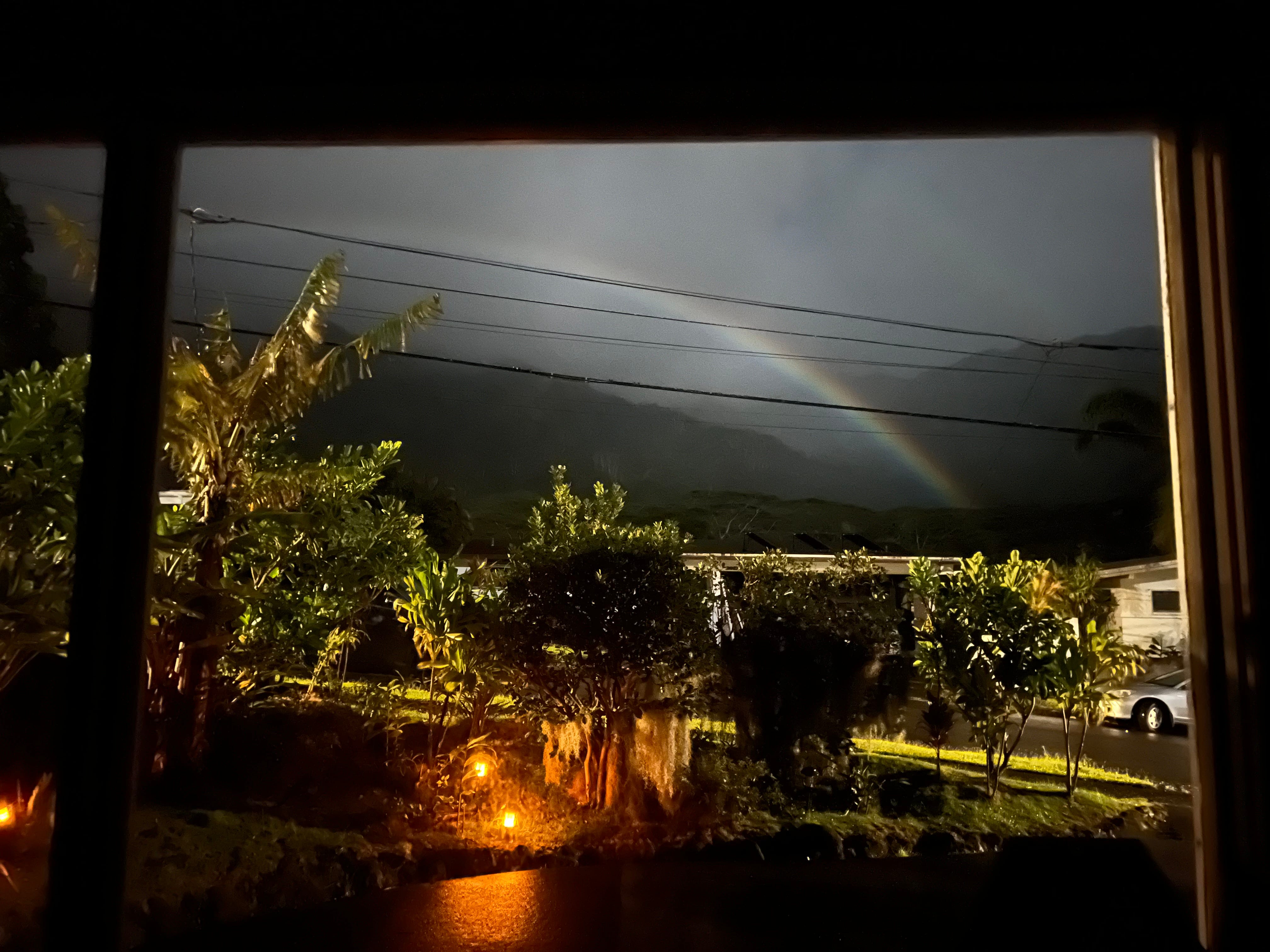
That’s such a good omen.
That’s when I was like moon you are my lover I love you and I’m on the right path with this movie. I really felt that confirmation.
To learn more about Jon Moritsugu and his films or to find a screening of Numbskull Revolution near year visit his website and Instagram.
i connected you two. fr. true story.
i suggested to Jon that he cast you in his new movie. i dm'ed jon or emailed him, probably emailed, and told him to cast you. and he was stoked when he looked you up.
then i emailed Molly, and she emailed me back bluntly, "ok, how much?" and then i replied that i didn't know and it was probably a very low budget movie, but explained the Jon Moritsugu lore and how it'd be a good fit. then no response. but whatever.
then i forgot about it, and when Jon's movie was released Molly wasn't in it. I assumed nothing happened.
so, wtf this is awesome.
❤️💫